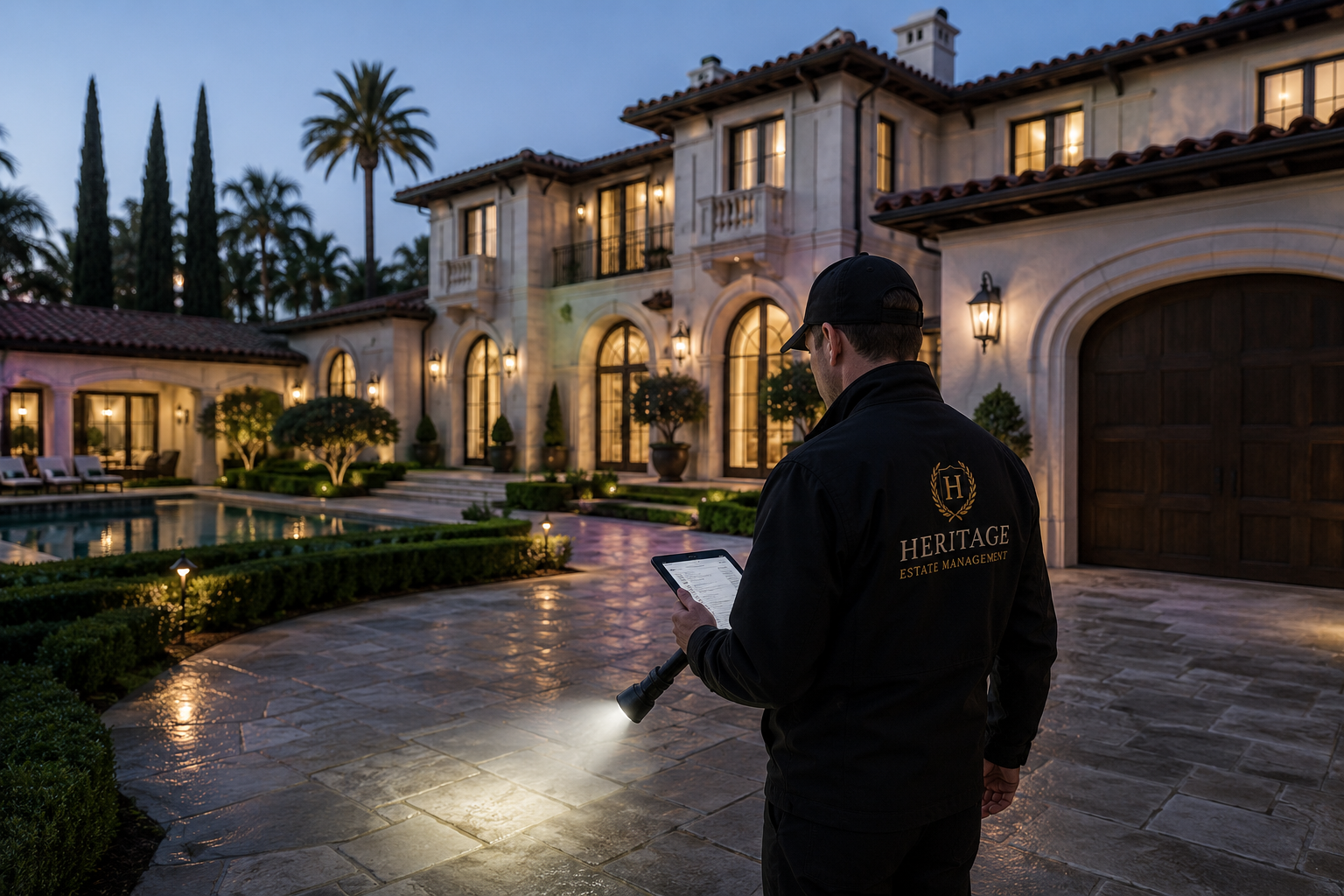
For many Los Angeles homeowners, a residence may sit unoccupied for weeks or months at a time.
The family may be traveling internationally, spending the season at another property, or dividing time between several residences.
But an empty luxury home does not stop operating simply because its owners are away.
Pools still require attention. HVAC systems continue running. Landscaping must be maintained. Deliveries arrive. Appliances can fail. Security alerts require a response. A small leak can become significant damage if nobody notices it.
This is where professional property oversight becomes invaluable.
The goal is not simply to watch an empty house.
It is to keep the residence protected, maintained, and ready for the owner's return.
An Unoccupied Estate Is Still an Active Property
Luxury residences contain interconnected systems that require ongoing oversight.
Even when nobody is living in the home, the property may still depend on:
HVAC systems
Security and surveillance
Smart-home technology
Pool and spa equipment
Irrigation
Refrigeration
Electrical systems
Plumbing
Gates and access controls
Landscaping
Specialty climate-control systems
Vehicles
A failure in one area can quickly affect another.
Professional estate management creates a routine for monitoring these systems instead of waiting for something to go wrong.
Why Weekly Property Checks Matter
One of the simplest and most effective forms of preventive property management is a structured property inspection.
A professional check should involve more than walking through the front door.
Interior and exterior areas can be reviewed for anything unusual: leaks, odors, temperature changes, equipment alerts, pest activity, storm damage, access issues, or visible maintenance concerns.
The purpose is early detection.
A minor plumbing issue discovered quickly may require a straightforward repair.
Left unnoticed for several weeks, the same problem could affect flooring, cabinetry, walls, artwork, or furnishings.
In luxury property management, prevention is almost always preferable to restoration.
Coordinating Vendors While the Family Travels
Properties continue to require service during extended absences.
Landscapers arrive.
Pool technicians need access.
HVAC maintenance may be scheduled.
Specialty contractors may need to inspect or repair equipment.
Professional oversight provides a central point of contact for these visits.
Rather than vendors contacting the homeowner directly, an estate manager can coordinate scheduling, arrange appropriate property access, follow up on work, and maintain records.
For households where privacy is especially important, controlled vendor access also reduces unnecessary exposure to the residence.
Maintaining Security Without Creating Disruption
An unoccupied residence requires thoughtful security procedures.
Access should remain controlled and the household team should know how to respond when alarms or unexpected events occur.
Property oversight may involve coordinating with existing security providers, confirming access procedures, monitoring property conditions during scheduled visits, and serving as an authorized point of contact when appropriate.
The objective is discreet vigilance.
A professionally managed home should remain secure without requiring the homeowner to manage every notification personally while traveling.
Protecting Valuable Interiors and Collections
Many luxury residences contain more than valuable real estate.
They may include fine art, antiques, wine collections, designer furnishings, jewelry, specialty fabrics, important documents, or other sensitive assets.
Environmental conditions matter.
Temperature fluctuations, humidity, sunlight, water intrusion, pests, or mechanical failures can affect valuable items long before a problem becomes obvious.
Regular property oversight adds another layer of protection by identifying unusual conditions early and coordinating the appropriate specialists when necessary.
Preparing Vehicles During Extended Absences
Vehicle management is another frequently overlooked part of estate operations.
Luxury and collector vehicles may require maintenance schedules, battery management, servicing, registration coordination, detailing, or preparation before the owner's return.
Just as the residence should be ready for occupancy, transportation should be ready when needed.
These small operational details are what separate basic property care from comprehensive estate management.
Preparing the Residence for the Owner's Return
Perhaps the clearest demonstration of excellent property management happens before the homeowner arrives.
A residence that has been unoccupied should not feel unoccupied.
Depending on the family's preferences, preparation may involve coordinating housekeeping, adjusting climate settings, provisioning the pantry and refrigerator, preparing bedrooms, checking outdoor spaces, confirming vehicles, arranging flowers, and ensuring property systems are operating correctly.
The objective is simple.
The owner opens the door and the home feels ready.
There should be no list of maintenance issues waiting on the kitchen counter.
No empty refrigerator.
No calls to make.
No operational catch-up.
Just home.
Seasonal Opening and Closing
For households that use residences seasonally, opening and closing procedures can be standardized.
Before a property becomes inactive, the team may follow a detailed closing checklist.
Before occupancy resumes, another process prepares the estate for arrival.
This approach is especially valuable for families managing several residences because it reduces reliance on memory and creates consistency across the portfolio.
Every property can have its own procedures while following the same overall standard of care.
The Value of Having One Point of Contact
Managing a residence remotely can quickly become distracting.
A landscaping question leads to a pool issue.
The pool issue requires access for another vendor.
An alarm notification arrives while the owner is traveling.
A delivery needs to be accepted.
Individually, none of these tasks seems particularly complicated.
Collectively, they consume time and attention.
A professional estate manager becomes the central operational point of contact, coordinating the details and escalating only what genuinely requires the owner's involvement.
That is where estate management creates value that cannot always be measured on a maintenance invoice:
It gives time back to the homeowner.
Your Home Should Be Ready Whether You Are There or Not
An exceptional residence should not depend on its owner being physically present to function properly.
Systems should be monitored.
Maintenance should continue.
Vendors should be coordinated.
Security procedures should remain active.
And the property should be prepared whenever the family decides to return.
At Heritage Estate Management, we provide customized on-site and remote property-management support for Los Angeles residences, including weekly property checks, vendor coordination, maintenance scheduling, vehicle management, seasonal preparation, emergency response, and household provisioning.
Whether you are across Los Angeles or across the world, your residence should remain exactly what it was designed to be:
A place of comfort, privacy, and peace of mind.
Contact Heritage Estate Management to discuss customized property oversight for your Los Angeles residence.